Ceramic Trends 2026: Textures, Formats and Natural Design

Ceramics in 2026 continue to evolve: they are no longer just a simple covering but become the true protagonist of the project. Current trends focus on texture, naturalness, modularity and finishes capable of creating warm or sculptural atmospheres depending on their use. These lines appear both in large-format solutions that minimise joints and in three-dimensional pieces that play with light and relief.

1. Shine, volume and 3D pieces: texture that creates visual focus

The search for tactile and visually active surfaces is driving the return of tiles with volume and gloss finishes. 3D pieces bring relief without sacrificing formal cleanliness; they work especially well on feature walls and vertical zones that aim to become a focal point.

How to use it

• Bathroom, kitchen or living room walls with 3D gloss finishes to add depth.

The Harlem collection is ideal thanks to its gloss surface and 3D relief — perfect when seeking sculptural presence on walls.

2. Hexagonal geometry and installations with minimal joints

The hexagon remains a trend due to its natural reference and its ability to create organic mosaics or regular compositions. The “jointless effect” trend allows for visual continuity, especially on floors and walls where a sense of seamless surface is desired.

Why it works

• Responds to the demand for clean surfaces (fewer joints = greater sense of calm).
• Hexagonal formats can incorporate subtle reliefs or honeycomb-style assemblies for tactile interest.

The Hex Collection is perfect for applications requiring visual continuity combined with the geometric appeal of the hexagon.

3. Multi-format and large format: modularity for flexible projects

The multi-format aesthetic is becoming one of the most versatile proposals for 2026. In this approach, pieces are combined within the same design, creating dynamic yet coherent surfaces without needing to define zones or change materials. This unified composition adds visual richness and allows for natural transitions within the flooring itself, especially in large-format ceramic floors where continuity and technical character are sought.

How to apply it

• Use the multi-format flooring pieces as a single ensemble, maintaining harmony among sizes and textures.
• Choose recommended patterns to ensure a balanced aesthetic result.
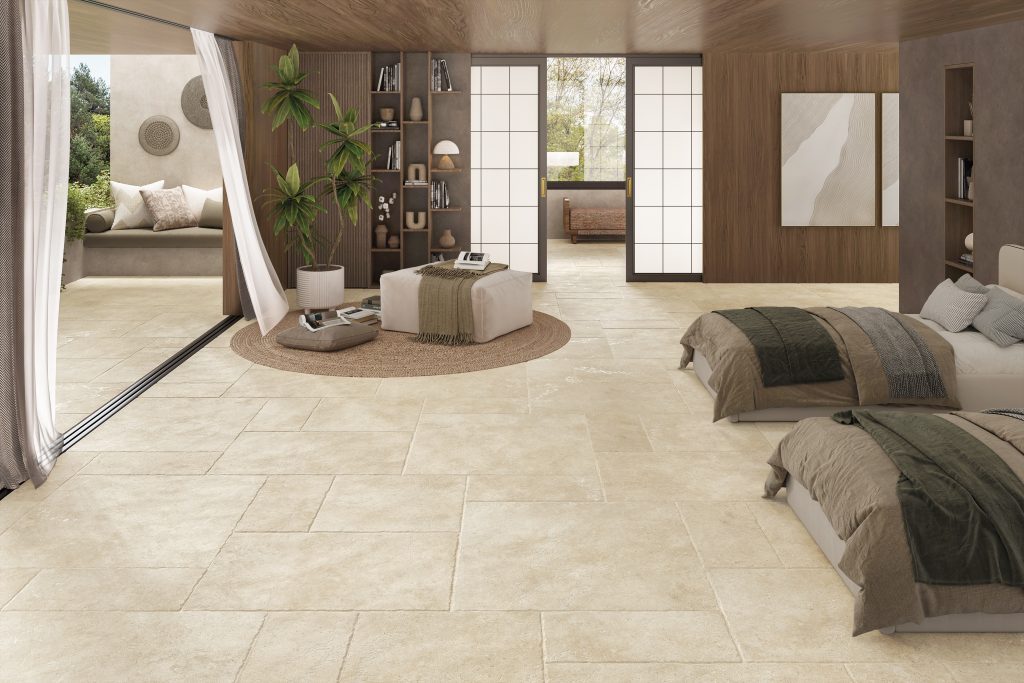

Windsor is a modular flooring collection that combines different formats with stone-inspired textures.

4. Naturalness without pattern: the fluid and organic aesthetic

The preference for surfaces that imitate natural processes leads to textures without mechanical repetition. This approach creates serene compositions, ideal for claddings where calm and visual continuity are desired without repetitive motifs.

The Gobi collection is perfect thanks to its seamless stone-like finish. 

5. Floral, craftsmanship and decorative shine: emotional value

Floral motifs and decorative details return as an expression of craftsmanship and visual storytelling. These pieces are used as accents: friezes, vertical panels or mixed compositions that bring emotional emphasis to kitchens, bathrooms or bedrooms.

Rosae, designed to introduce floral motifs and subtle shine in vertical details, is the perfect example.

If you want to incorporate these trends into your next project, at Porcelánicos HDC we can help you with personalised advice for architects and interior designers.

Contact:
📞 +34 964 32 99 40
📧 hdc@porcelanicoshdc.es


Porcelánicos HDC — We inspire design. We manufacture excellence.

Related posts

Contact Us